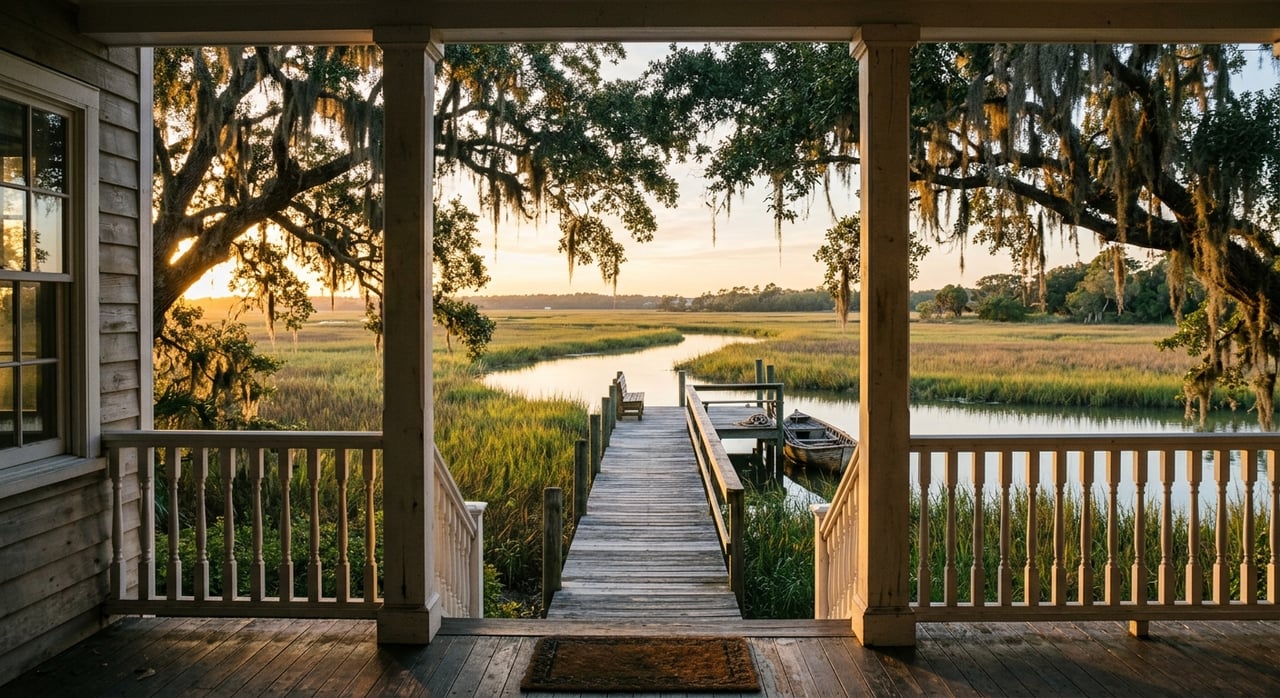
If you picture "waterfront" in Richmond Hill as a sandy beach out your back door, you may miss what makes this area special. Here, the water lifestyle is more often about rivers, creeks, marshes, lagoons, and marinas, with all the beauty and recreation that come with them. If you are thinking about buying near the water, understanding those differences can help you choose a home that fits your goals and avoid surprises later. Let’s dive in.
Richmond Hill Water Living Explained
In Richmond Hill, waterfront and marshfront living usually means river access, tidal views, marina use, or neighborhood water features rather than beachfront property. The city notes that this low-lying coastal plain is vulnerable to flooding from rivers, canals, and hurricanes, which makes water location both a lifestyle choice and a practical one.
That is why two homes described as "on the water" can offer very different experiences. One may give you direct deepwater boating access, while another may offer wide marsh views, a lagoon backdrop, or easy use of a neighborhood marina.
Deepwater Riverfront
Deepwater riverfront is the closest match to what many buyers think of as traditional waterfront living. In Richmond Hill, that often means direct access to the Ogeechee River or access through a connected marina, as seen in communities like The Ford Field & River Club and Waterways.
If boating is high on your list, this category usually deserves the closest look. The key question is not just whether water is nearby, but whether you can actually launch, dock, and navigate from the property or marina in the way you want.
Marshfront Living
Marshfront living often centers more on views, tides, and natural scenery than on keeping a boat at your back door. These homes may sit along the marsh edge or overlook tidal grasslands that change throughout the day with light, weather, and water movement.
Georgia DNR regulates work near salt marsh, and Richmond Hill specifically notes marsh areas along the river in The Ford Plantation as part of the floodplain. That means marshfront property can be beautiful and distinctive, but it also comes with extra questions about flood exposure, permitting, and what changes can be made to the site.
Lagoon and Lake Settings
Not every buyer wants the added complexity of a riverfront or marsh-edge lot. Lagoon-front and lake-oriented homes can offer a similar Lowcountry feel in a more neighborhood-centered setup.
Waterways is a good example of this mix. The community includes marsh-view, lagoon, and lake-oriented homesites, along with kayak and canoe access, giving buyers a range of ways to enjoy water without relying on a private dock.
Public-Access Waterfront
You do not need to own waterfront property to enjoy Richmond Hill’s water lifestyle. Public-access spots like Fort McAllister State Park and Demeries Creek Boat Ramp give residents and visitors access to boating, fishing, paddling, and marsh scenery.
For some buyers, this is the sweet spot. You can enjoy the coastal setting and outdoor recreation while keeping your home search focused on other priorities like budget, maintenance, or neighborhood layout.
Why Buyers Love It
Richmond Hill’s appeal is not just about the water itself. It is about how the water shapes everyday life, from morning views to weekend recreation.
The setting is a big part of that draw. Fort McAllister State Park combines live oaks, Spanish moss, salt marsh, a fishing pier, paddling, and birding, while J. F. Gregory Recreational Park brings a wetlands backdrop into town with a lagoon, canoeing, fishing, and a three-mile trail around a former rice field that is now wooded wetland.
Scenery That Changes Every Day
One reason buyers are drawn to marshfront and waterfront property is that the view rarely feels static. Tides, weather, and seasons can make the same backyard or porch feel different from one day to the next.
Georgia DNR also notes that marshes support fish and shellfish, help treat runoff, reduce erosion and flooding, and support recreation. For you as a homeowner, that often translates into a setting that feels closely tied to wildlife, open space, and the natural rhythm of the coast.
Outdoor Access and Recreation
For some buyers, the main benefit is simple: it is easier to get outside. Depending on the property or community, that could mean boating, fishing, kayaking, birding, trail walking, or just spending more time on the porch looking out over the water.
That lifestyle can look very different from one neighborhood to another. One buyer may want deepwater access for boating, while another may care more about a quiet marsh view and nearby trails.
Amenity Living vs Private Access
Richmond Hill water living is not one-size-fits-all. Some buyers want private access, while others prefer a neighborhood where water is part of a larger amenity package.
Waterways centers much of its lifestyle around Marina Village, with dry slip storage, freshwater boat slips, fueling and launching facilities, retail, casual dining, pools, fitness space, paths, a dog park, and community gardens. That setup can be appealing if you want a built-in lifestyle without managing every detail yourself.
The Ford Field & River Club takes a different approach as a private residential golf and sporting community with a deepwater marina, golf, equestrian facilities, clubhouse, spa, and riverfront trails. It is important to note that access and rights to amenities there are subject to membership requirements, dues, fees, and other limitations.
Why This Difference Matters
If you are comparing properties, do not assume all water-oriented neighborhoods offer the same access. A home with a marina nearby is not the same as a home with a deeded dock, and a marsh-view lot is not the same as a deepwater lot.
Understanding that difference early can save time and help you compare homes more accurately. It also helps you weigh the full cost of ownership, including dues, maintenance, and any membership structure tied to amenities.
What Homes Often Look Like
Richmond Hill’s waterfront and marshfront homes often reflect coastal and Lowcountry design. In communities like Waterways, homes are described as coastal and Lowcountry inspired, with deep porches, raised porches, exposed rafter tails, steep rooflines, dormers, and cottage or estate-style layouts.
At The Ford, the architectural mix includes New Orleans French Colonials, grand Southern manors, and Charleston-style garden homes. Across the area, you may see everything from elevated coastal cottages to larger estate homes, depending on the lot type and community setting.
Why Elevation Shapes Design
Home style here is not only about looks. Flood exposure and storm conditions can influence how a home is built.
Richmond Hill requires houses and certain other structures in special flood hazard areas to be built one foot above the 100-year base flood elevation. In coastal settings, elevated foundations may be used when conditions call for them, which helps explain why raised entries, elevated porches, and stilted or piling-supported designs are common features in some water-oriented areas.
The Practical Side of Waterfront Ownership
This is where water living becomes more than a dream board. In Richmond Hill, the practical side often comes down to flood exposure, insurance, permits, tides, maintenance, and ongoing costs.
The city says buyers can ask staff about a property’s flood zone, base flood elevation, floodway status, and whether it is near wetlands or areas with historical flooding. That information can make a major difference in how you evaluate a property.
Flood Zones and Elevation Certificates
Before you fall in love with the view, ask about the flood zone and whether an elevation certificate is available. Richmond Hill keeps elevation certificates for buildings constructed in the floodplain since 1984, which can help you better understand the structure’s relationship to local flood requirements.
The city also directs buyers to review flood maps. That step may not be glamorous, but it is one of the most useful things you can do early in the process.
Insurance and Build Constraints
Flood insurance is separate from standard homeowners insurance. Richmond Hill notes that cost can depend on things like coverage amount, location, flood zone, and the structure’s design and age.
There may also be limits on what you can change on the lot. The city’s stormwater ordinance restricts fill in special flood hazard areas, so regrading or lot changes can be more constrained than they would be in more inland neighborhoods.
Permits Near Marsh and Shoreline
If the property is near salt marsh or shoreline, permitting matters. Georgia DNR says work near salt marsh, beach, or shoreline may require jurisdictional review and permits, including work related to marinas, community docks, dredging, and bank stabilization.
That means any plans you have for a dock, shoreline work, or certain site changes should be checked carefully. What seems possible on a showing may not be simple once you look at local coastal rules.
Tides and Boating Reality
In coastal Georgia, daily tides matter. Georgia DNR says coastal creeks and rivers commonly have daily tides of 6 to 9 feet, and low tide can create drop-offs at ramps and make trailer loading harder.
For you, that means boating access is not just about having a ramp or dock nearby. It is also about how usable that access is at different tide levels and whether it matches how you plan to use your boat.
Salt Air and Maintenance
Waterfront ownership can also mean more upkeep. Coastal conditions can increase corrosion exposure, especially for exterior materials, hardware, and dock components.
That does not mean water living is not worth it. It just means you should go in with a clear picture of the maintenance plan, materials used, and the long-term care the property may need.
Smart Questions to Ask on a Tour
If you are touring waterfront or marshfront homes in Richmond Hill, a few focused questions can tell you a lot:
- Is this property deepwater, tidal creek, marshfront, lagoon-front, or lakefront?
- Does it offer actual boating access, or mainly a view?
- Is there a private dock, lift, shared marina slip, or nearby boat ramp?
- Who maintains the dock, slip, bulkhead, or shoreline features?
- What is the flood zone and base flood elevation?
- Is an elevation certificate available?
- Is the lot inside marsh jurisdiction or another coastal permit area?
- Have prior dock, shoreline, or bulkhead permits been issued?
- How does low tide affect the dock, launch, or trailer loading?
- What dues, fees, or membership costs apply?
- What exterior materials were chosen for salt air, humidity, and storm exposure?
These questions can help you separate a beautiful listing from a practical fit. In a place like Richmond Hill, that distinction really matters.
What It Really Means in Richmond Hill
Waterfront and marshfront living in Richmond Hill is less about beach life and more about scenery, access, and the rhythm of the coast. You may be choosing between deepwater boating, marsh views, neighborhood lagoons, or easy public access to parks and ramps.
The right fit depends on how you want to live day to day. If you understand the water type, flood considerations, permit limits, maintenance needs, and amenity structure up front, you can shop with a lot more confidence.
If you are sorting through waterfront, marshfront, or lagoon-area options in Richmond Hill, Paul Armitage can help you compare the lifestyle details and the practical side so you can make a clear, informed move.
FAQs
What does waterfront living usually mean in Richmond Hill?
- In Richmond Hill, waterfront living usually means river, creek, marsh, lagoon, lake, or marina-oriented property rather than beachfront property.
What is the difference between marshfront and deepwater property in Richmond Hill?
- Marshfront property often focuses on views and tidal scenery, while deepwater property is more likely to offer direct boating access to the Ogeechee River or a connected marina.
What should buyers ask about flood risk for Richmond Hill waterfront homes?
- Buyers should ask about the flood zone, base flood elevation, floodway status, historical flooding, and whether an elevation certificate is available.
Do Richmond Hill waterfront homes always come with private dock access?
- No. Some properties offer private docks or marina access, while others mainly offer water views or rely on public-access boating locations.
What extra costs can come with marshfront or waterfront living in Richmond Hill?
- Extra costs can include flood insurance, exterior maintenance related to salt air and humidity, dock or shoreline upkeep, and any applicable dues, fees, or membership costs.
Why do tides matter when buying a waterfront home in Richmond Hill?
- Tides affect how usable docks, ramps, and launches are, and low tide can make trailer loading and some boating access more difficult.