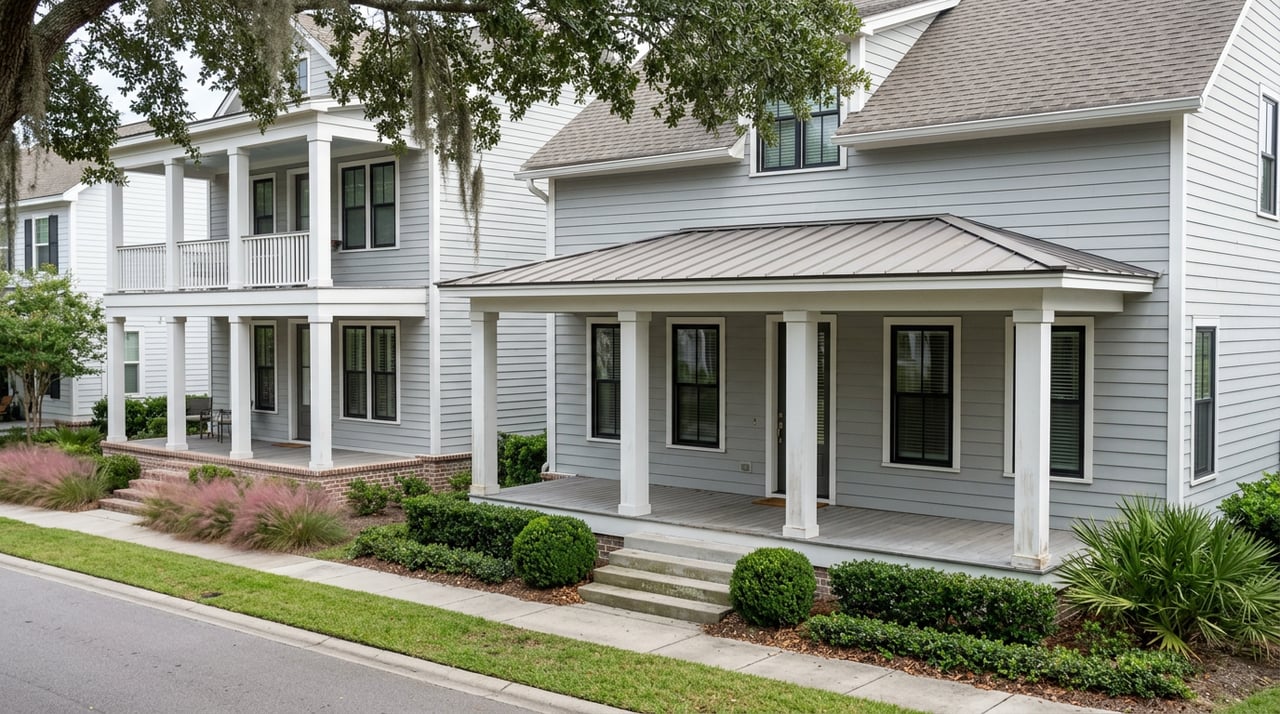
If you've been watching state housing reports and figured townhomes were finally the easy lane into Richmond Hill, the numbers you're reading and the market you'll actually meet are describing two different things.
Georgia's statewide data, current as of August 16, 2026, shows the townhouse and condo segment gaining inventory faster than any other property type, up 14.1 percent, and sitting at 6.8 months of supply against 5.1 months for single-family homes. In plain terms: across Georgia, townhomes are the segment where buyers are gaining room to breathe. A Richmond Hill market snapshot pulled from the Savannah MLS in early September told a different story for this specific city. Single-family homes here are averaging 76 days on market, giving buyers time to inspect, negotiate, and walk away from a bad deal without losing their spot in line. Townhomes are the opposite. Supply is thin enough that a buyer who waits a week to think it over is often shopping for something else entirely.
That gap between what the state data implies and what's actually happening on the ground in Richmond Hill is the thing worth understanding before you write an offer, because it changes how you should shop depending on which side of that line you're on.
What the State Numbers Actually Say
Georgia Association of REALTORS® data shows a market-wide inventory gain of 4.4 percent, with the townhouse and condo category driving most of that growth. Here's the comparison as reported for the state overall:
| Property Type | Months of Supply | Inventory Change |
|---|---|---|
| Single-family homes | 5.1 months | Modest growth |
| Townhomes / condos | 6.8 months | +14.1% |
Read on its own, that table tells a simple story. Statewide, townhome buyers have more to choose from and more leverage than they did a year ago. If you searched "Georgia housing market 2026" before you started house hunting in Richmond Hill, this is probably the version you saw.
What Richmond Hill's Own Numbers Say Instead
Zoom into Richmond Hill specifically and the pattern flips. A market analysis built directly from Savannah MLS transaction data and published in early September 2026 describes single-family inventory as adequate, with enough homes sitting at that 76-day average to give buyers real negotiating room on price and repair requests. Townhomes get no such cushion. The same report describes townhome supply here as thin enough that buyers need to be ready to act the moment new listings hit the MLS, because there isn't a deep backlog of comparable units waiting behind them.
That's not a contradiction in the data. It's a sign that Richmond Hill's townhome market doesn't look like Georgia's townhome market as a whole. It looks like a handful of specific communities, and once you know which ones, the divergence makes sense.
Why the Same City Produces Two Different Stories
Richmond Hill's townhome inventory isn't spread evenly across dozens of scattered infill lots the way it might be in a larger metro. It's concentrated in a small number of master-planned communities that draw a specific kind of buyer, and that concentration is what keeps the local segment tight even while the state segment loosens.
A few examples worth knowing by name if you're comparing neighborhoods:
- Waterways, a Pulte-built community with lagoon-front lots, a community pool, dry boat storage, and golf-cart-friendly streets, with homes starting near $420,000. Its amenity package and proximity to I-95 make it a natural landing spot for PCS families who want a low-maintenance home they can walk away from without worrying about yard care during the next move.
- The Commons, one of the more established townhome neighborhoods in the city, often listed among the more sought-after options for buyers who want equity growth without a single-family-sized to-do list.
- Sterling Creek and Dunham Marsh The Villas, both drawing move-up buyers who want new construction finishes at a townhome price point rather than a full single-family build.
Builder-tracked data from New Home Source shows just how narrow this pipeline actually is. Across the broader Richmond Hill new-construction submarket, only a handful of condo and townhome communities are offering ready-to-build units at any given time, with total available inventory measured in the dozens rather than the hundreds. Compare that to the much deeper single-family new-construction pipeline in the same area, and the supply gap starts to explain itself. Statewide townhome growth is happening in dozens of markets with room to add product. Richmond Hill's townhome growth is capped by how many of these specific communities exist and how quickly they build out.
What This Means If You're Choosing Between the Two
If you're shopping single-family homes here, the 76-day average is information you can use. It means a home that's been listed for three or four weeks hasn't necessarily been passed over. It means you have room to request a full inspection, negotiate on closing costs, and take a second look before you commit. Sellers in this segment should expect buyers to ask for more, and price accordingly rather than assuming a fast sale.
If you're shopping in Waterways, The Commons, Sterling Creek, or a similar community, treat the process differently. Get your financing pre-approved before you tour, know your top number going in, and expect to make a decision within days rather than weeks if the layout and lot work for you. This isn't a segment where circling back next month is a safe plan.
If you already own a townhome in one of these communities and you're weighing whether to sell, the local data supports pricing at the top of your comparable range rather than shading down to compete. The scarcity that makes these units hard to buy also makes them easier to sell at a fair price, provided the listing reflects what the market is actually seeing rather than what a national headline says townhomes should be doing.
A Few Questions Worth Asking Before You Tour
Does tight townhome supply mean prices are climbing fast in these communities? The data available doesn't isolate price appreciation by community, so it's worth asking for recent, specific comps in whichever neighborhood you're considering rather than assuming the trend applies evenly.
Should I just wait for more townhome inventory to hit the market? Given how concentrated the supply is in a small number of communities, waiting is a real option only if you're not attached to a specific neighborhood. If Waterways or The Commons is the goal, waiting usually means competing with the same buyers for the same limited pipeline.
What if I want a single-family home in one of these same communities instead? Several of these developments, including Waterways, offer both product types. If the 76-day single-family window matters more to you than the townhome maintenance savings, it's worth asking a builder or listing agent what single-family inventory exists in the same footprint before you commit to the townhome side.
Richmond Hill's market rewards buyers who know which segment they're actually in, not just which segment the state headline described. If you're trying to figure out where your search fits, whether that's a single-family home with room to negotiate or a townhome where timing matters more than patience, Paul Armitage can walk you through what's actually available in each of these communities right now. Get a free home valuation or call and text for fast, honest answers before you write an offer.